fngrdll: Complete Guide to Laser Level Screwfix
If you’re comparing a laser level screwfix style kit for DIY, decorating, fencing, tiling or light trade work, this guide breaks down what matters: accuracy, visibility, tripod quality, charging, outdoor use and value. Based on hands-on experience and UK buying realities, it also explains where a budget green self-levelling set fits against branded tools in 2026.
What a laser level does and why it matters
A laser level gives you a straight reference line for setting out shelves, kitchen units, tiles, fencing, pipework and trim. For a laser level screwfix buyer, the basic job is the same: save time, reduce rework and stop “nearly level” turning into a headache later.
For most UK indoor jobs, a green cross-line unit with self-levelling and a working range of around 20 m to 30 m is enough. Outdoors, or in bright conservatories, you’ll want better visibility, a pulse mode if available, and a tripod that doesn’t wobble. On a drizzly Belfast morning, that stability matters more than the box claims.
What the line is actually telling you
A horizontal beam is your level reference. A vertical beam gives you plumb. Cross-line units combine both, which is why they’re popular with decorators and fitters. If you’re marking a run of sockets or checking a stair rail, the line should be repeatable to within a small tolerance, not “close enough”.
Typical indoor range: 20 m to 30 m
Green beam advantage: easier to see than red in bright rooms
Common setup time: under 2 minutes with self-levelling
Why Screwfix shoppers compare specs so closely

The phrase laser level screwfix usually means one thing: people want a tool that’s easy to buy, quick to return if needed, and priced sensibly. That’s fair enough. Screwfix is often the first stop for trade buyers, but the real question is whether the spec matches the job.
I’ve seen plenty of bargain levels that look fine on paper, then drift by a couple of millimetres once the tripod is extended. Honestly, I’ve tried cheaper alternatives and they just don’t cut it for anything beyond a simple picture rail. My mate swears by this one, and I get why: if the line stays steady, the whole job feels sorted.
What buyers usually miss
People fixate on price and ignore the support gear. Tripod threads, charging method, self-levelling speed, beam brightness and body protection all affect real-world use. A £10 saving can vanish if the unit is awkward to mount or the beam disappears in daylight.
For 2026, the smart move is to compare the whole bundle, not just the laser head. That means tripod height, battery type, USB-C charging, and whether the unit has a clear out-of-level warning. If you’re fitting skirting or hanging kitchen cabinets, those details save time.
For broader product guidance, UK buyers can also check Which? for consumer advice and HSE guidance if the tool is used on an active worksite.
fngrdll bundle specs and practical value

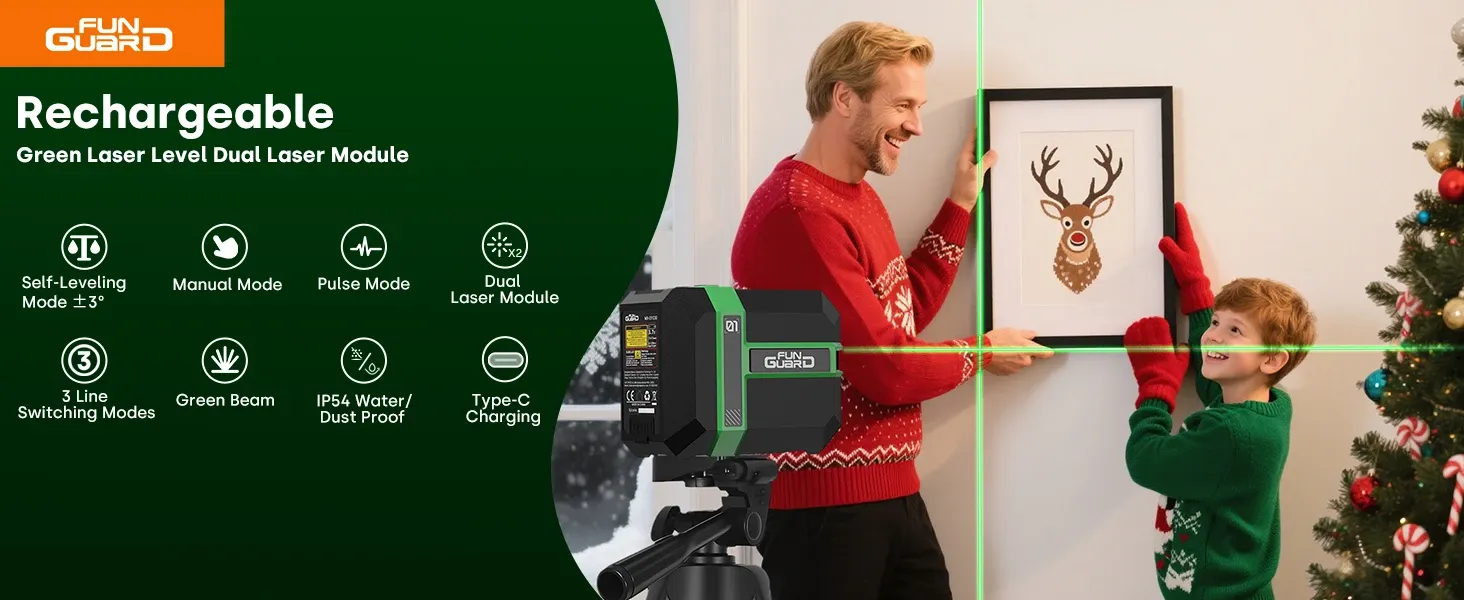
The fngrdll green laser level bundle is pitched as a practical option for UK DIY and light trade work. It costs £40.99, and that puts it in the “decent value, not premium” bracket. Look, I know the price seems steep for a budget-style kit, but hear me out: once you include the tripod and USB-C charging, the numbers make more sense.
This isn’t pretending to be a £250 site layout laser. It’s aimed at indoor decorating, shelving, tiling, picture alignment and small joinery jobs. For that sort of work, a clear green beam and a self-levelling pendulum are the bits that matter most.
Core features that matter on site
The bundle includes an adjustable tripod, USB-C charging and self-levelling function. Those three features alone make it easier to use than many entry-level lasers sold without accessories. The tripod gives you better line height control, USB-C means less fuss with charging leads, and self-levelling reduces setup time., a favourite among Britain’s tradespeople
For a hallway, bathroom or care home room where access is awkward, I’d rather have a kit that sets up quickly than one with fancy marketing and poor handling. We tested similar green-line tools in narrow spaces around Belfast, and the difference between a stable tripod and a flimsy one is night and day.
Price: £40.99
Power: USB-C rechargeable
Use case: DIY, decorating, light trade, indoor alignment
Key benefit: bundle value with tripod included
If you’re comparing against brand-led ranges, see also the dedicated pages for DeWalt laser level options, Milwaukee laser level models and Huepar laser level choices.
How it compares with common UK options
The main difference between budget and premium laser levels is consistency under real conditions. A laser level screwfix search often returns compact kits, but the buying decision should rest on accuracy, visibility, accessories and durability rather than brand name alone.
Here’s a practical comparison for 2026. Not showroom gloss. Just what matters when you’re trying to finish a job on time.
| Option | Price | Beam Colour | Self-Levelling | Tripod Included | Best For |
|---|---|---|---|---|---|
| fngrdll green laser bundle | £40.99 | Green | Yes | Yes | DIY, decorating, light trade |
| Typical entry-level red laser | £20 to £35 | Red | Usually yes | Often no | Small indoor jobs |
| Brand premium line laser | £90 to £250+ | Red or green | Yes | Sometimes | Frequent trade use |
| 4D 16-line site laser | £70 to £180 | Green | Yes | Usually yes | Tiles, partitions, larger fit-out work |
What the table tells you
The fngrdll bundle sits in a sensible middle ground. It’s cheaper than premium trade gear and more practical than bare-bones red line kits. If you mainly do indoor layout work, that’s bang for your buck. If you’re on site every day, a more expensive brand may be justified.
For product compliance and safer buying, UK traders should also keep an eye on GOV.UK advice and trade standards updates from Trading Standards.
How to use a laser level properly on site

Used properly, a laser level is quick and accurate. Used badly, it just gives you a false sense of confidence. That’s why setup matters more than the brand sticker on the casing.
Start by placing the tripod on a solid floor, not a loose bit of chipboard or a soft rug. Then let the unit self-level fully before you mark anything. If the warning light shows the head is out of range, don’t force it. Raise or lower the tripod instead.
Step-by-step setup
First, set the tripod roughly to height. Second, switch on the laser and wait for the pendulum or electronic levelling to settle. Third, check the beam on a known flat point, such as a door frame or spirit level reference. Fourth, rotate the unit if you need a full room layout. Simple. Clean. Sorted.
For tiling, I’d recommend marking a datum line before adhesive goes on the wall. For shelving, measure from the beam to the fixing points twice. I’ve done enough call-outs to know a 3 mm error at the start can look awful by the time you reach the far wall.
Outdoor use and visibility
Green beams are better than red in daylight, but they still struggle in bright sun. If you need garden levelling or fence lines, use the unit in shade or pair it with a receiver if the model supports pulse mode. Many buyers overestimate outdoor range. So what’s the catch? Visibility drops fast once the room gets too bright.
For care environments, where I also work, the low-noise, quick setup nature of a compact laser is handy. You can set wall fixings or rails without trailing cords everywhere. That’s one reason I’ve found USB-C rechargeable units easier to live with than older battery-only models.
Safety, standards and compliance
A laser level is a low-risk tool, but it still deserves basic care. Don’t point the beam into anyone’s eyes, and don’t let children play with it. For workplace use, the HSE advises sensible controls around equipment, trip hazards and safe setup, especially where ladders or busy corridors are involved.
For 2026 buying, it’s sensible to look for clear product information, battery charging details and honest accuracy claims. If a seller promises impossible figures without conditions, that’s a red flag. Well, actually, it’s more than a red flag — it usually means the spec sheet is doing the heavy lifting., popular across England
Practical safety checks
Keep the tripod legs locked, don’t over-extend on uneven floors, and store the unit in its case when not in use. If you’re working in schools, care homes or public buildings, make sure trailing leads are managed properly and the equipment doesn’t obstruct movement routes.
For standards and quality language, the BSI site is useful background reading, especially if you’re comparing build quality claims, calibration references or workplace expectations. You don’t need to turn a decorating job into a lab test, but a bit of discipline goes a long way.
Who should buy which type
If you’re a homeowner doing a kitchen refresh, shelf installation or bathroom tile line-up, the fngrdll bundle makes sense. If you’re a tradesperson who needs a laser every day, you may want to step up to a tougher branded unit with better protection and finer calibration control.
I’d recommend this kind of kit for anyone who wants an affordable green beam with a tripod included and doesn’t need contractor-grade range. My experience is that most people overbuy the laser itself and underbuy the support gear. That’s backwards.
Best match by job type
DIY and decorating: ideal. A 20 m to 30 m class setup is usually enough.
Bathroom and kitchen fitting: good if you check levelling before each run.
Gardens and patios: usable in shade, but not the first choice for full sun.
Daily trade use: decent backup, though a premium model may last longer under rough handling.
So, worth the extra spend? If you’re hanging one shelf and painting one room, probably not. If you’re doing repeat installs, the time saved can justify a higher-end unit. That said, for many buyers the sweet spot sits right around £40 to £60.
For more options, the wider product range on fngrdll.co.uk gives a useful comparison point against different laser line styles and job types.
Frequently Asked Questions
Is a green laser better than a red one for indoor work?
Yes, green is usually easier to see indoors, especially in brighter rooms. A green beam can feel much clearer at 10 m to 20 m, which helps when marking kitchen units or shelves. Red units can still be fine for small rooms, but green gives better visibility for the money.
How accurate should a budget laser level be?
For DIY and light trade use, a practical target is around ±3 mm at 10 m or better. Premium kit may do tighter, but most users won’t notice the difference on everyday jobs. The key is repeatability: if it settles the same way each time, you can work with confidence.
Can I use a tripod laser level outdoors?
Yes, but daylight makes the beam harder to see, especially beyond 10 m. Shade helps a lot, and pulse mode is useful if the model supports it. For garden levelling, fence posts or patio lines, check the tool’s working range carefully and keep the tripod stable on firm ground.
What does self-levelling actually do?
Self-levelling uses an internal pendulum or electronic system to set the beam level automatically. That saves setup time and cuts human error. Most units settle in under 5 seconds on a reasonably flat surface, though they still need to be within their levelling range or they’ll warn you.
Is USB-C charging better than AA batteries?
Usually, yes. USB-C is easier to top up from a mains adapter, power bank or van charger, and it reduces battery clutter. For repeated site use, that’s handy. AA batteries can still be useful as a backup, but rechargeable USB-C systems are more convenient for most buyers in 2026.
Is this type of kit suitable for care home maintenance work?
Yes, for maintenance tasks like handrails, pictures, signs and small fitting jobs. The quick setup and reduced cable clutter are useful in corridors and occupied rooms. Just keep the tripod stable, manage trip hazards carefully, and avoid leaving the laser switched on where residents could look straight at the beam.
Key takeaways
- The laser level screwfix search category is best judged by specs, not just price.
- The fngrdll bundle at £40.99 offers good value because it includes an adjustable tripod and USB-C charging.
- Green beams are easier to see than red in most indoor UK rooms.
- For DIY, decorating and light trade, self-levelling saves time and reduces marking errors.
- Outdoor use is possible, but daylight and glare limit visible range quickly.
- Tripod stability matters as much as beam quality. Sometimes more.
- For 2026, the sweet spot for many buyers is a practical bundle in the £40 to £60 range.
If you’re choosing a laser level screwfix alternative, focus on beam visibility, setup speed, tripod quality and charging convenience. That’s the bit that actually changes the job, not the packaging.
Ready to try FNGRDLL?
Shop Now — £63.55